10/09/2026 04:23 AM
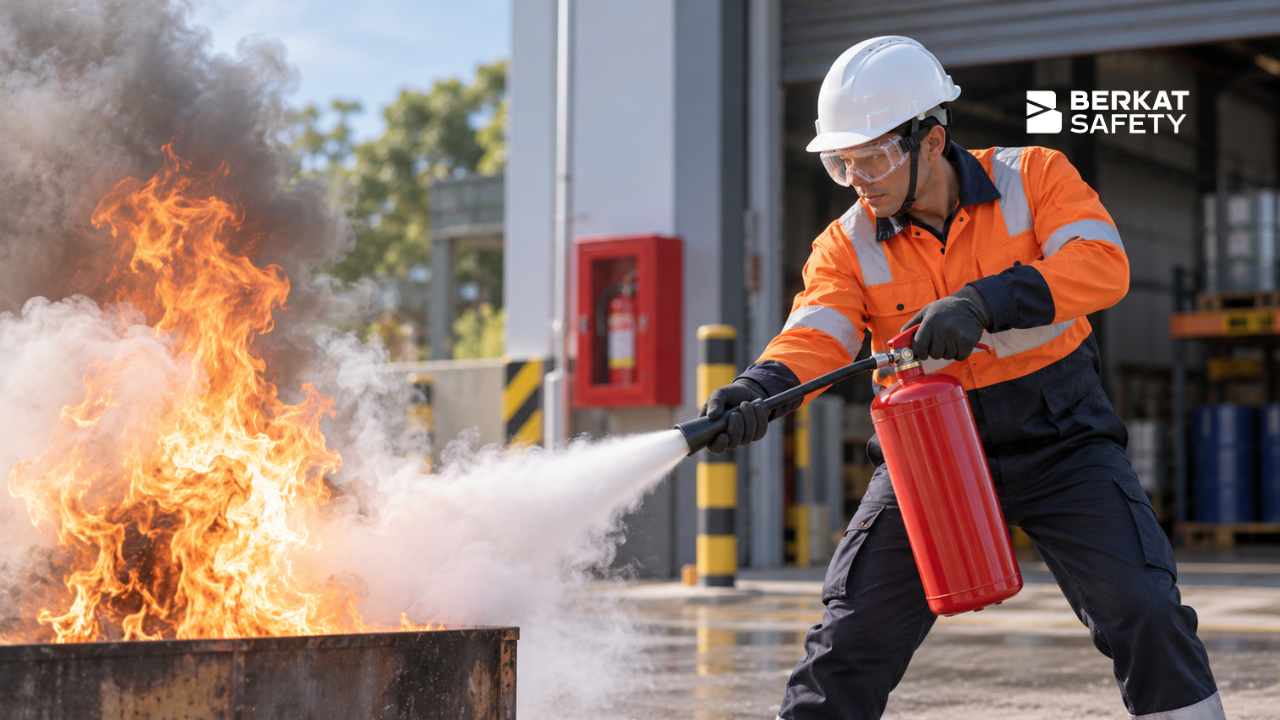
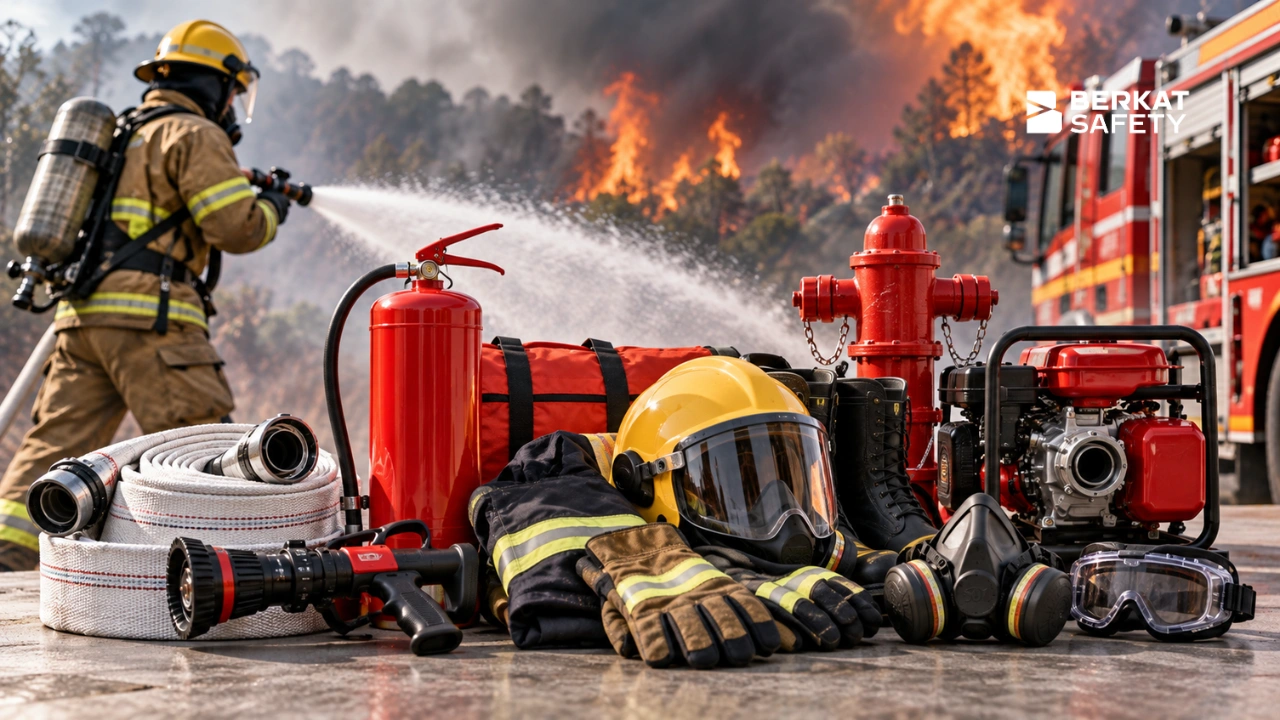
Fires can occur in many environments, including homes, offices, warehouses, project sites, and industrial facilities. The causes can vary as well, from combustible solid materials and certain liquids to gases and equipment involving electrical energy.
In certain situations, fires that are still in their early stages can be handled using a portable fire extinguisher. However, simply having a fire extinguisher available is not enough. Users also need to understand its function, the types of extinguishing agents, how to use it, and when to stop firefighting and evacuate immediately.
Understanding the basics of using a fire extinguisher can help improve preparedness for fire risks and support safety practices at home and in the workplace.
What Is a Fire Extinguisher and What Is Its Function?
A fire extinguisher is a portable firefighting device designed to help control fires in their early stages.
Fire extinguishers are generally placed in easily accessible locations so they can be used quickly during an emergency. However, each type uses a different extinguishing agent and has its own usage characteristics.
The main function of a fire extinguisher is to help control or put out a small fire before it develops into a larger one. For this reason, the type of extinguisher should be selected based on the potential fire hazards in the area.
In the workplace, providing fire extinguishers is part of a broader fire protection effort alongside emergency procedures, detection systems, evacuation routes, worker training, and other safety equipment.
Types of Fire Extinguishers Based on Their Extinguishing Agents
Fire extinguishers are available with different types of extinguishing agents. Each agent has its own characteristics, so its use should match the type of fire risk involved.
Dry Powder Fire Extinguisher
A dry powder fire extinguisher uses extinguishing powder to help deal with certain types of fires according to its classification and product specifications.
This type is widely used because it can be applied in various environments. However, the powder may leave residue, so affected areas or equipment may need to be cleaned after the fire has been controlled.
Before use, always check the extinguisher's label and classification to ensure it is suitable for the potential hazards at the location.
CO₂ Fire Extinguisher
A carbon dioxide, or CO₂, fire extinguisher uses carbon dioxide gas as its extinguishing agent. Unlike dry powder extinguishers, it generally does not leave residue.
Because of this characteristic, CO₂ extinguishers are often considered for areas with equipment or devices that need to be protected from extinguishing-agent residue.
Users should still understand the instructions for use and product limitations, especially in relation to the conditions of the area and the type of fire being handled.
Foam Fire Extinguisher
A foam fire extinguisher uses foam as an extinguishing agent to help deal with certain types of fires, particularly those covered by the classification stated on the product.
Foam works differently from powder and carbon dioxide. Therefore, selection should take into account the materials that may burn and the environmental conditions where the extinguisher will be used.
Clean Agent Fire Extinguisher
A clean agent fire extinguisher uses an extinguishing agent designed to leave minimal residue after use.
This type can be used in areas where cleanliness and equipment protection require special consideration. A clean agent extinguisher should still be selected according to the fire classification, product specifications, and protection needs at the location.
Why Can't All Fires Be Extinguished with Water?
Many people consider water the main solution for putting out a fire. In reality, water is not suitable for every type of fire.
This is because every burning material has different characteristics. Using the wrong extinguishing agent can cause the fire to spread, increase the risk, or make the situation more dangerous.
For example, fires involving flammable liquids require different handling from fires involving solid materials. The same applies to fires involving electrical energy sources.
For this reason, the first step before attempting to extinguish a fire is to identify the source or burning material and choose an appropriate response method.
If you are unsure about the type of fire or how to handle it, personal safety should be the priority. Do not take actions that could increase the risk.
Identify the Type of Fire Before Trying to Put It Out
Identifying the source of a fire is an important step in determining the right extinguishing method.
Fires Involving Solid Materials
Fires may involve various combustible solid materials, such as:
- Wood
- Paper
- Fabric
- Certain types of plastic
- Other combustible solid materials
The type of burning material needs to be identified so the extinguishing agent used matches the existing risk.
Flammable Liquid Fires
Some workplaces use or store flammable liquids, such as:
- Certain fuels
- Solvents
- Paint
- Other flammable liquids
Fires involving liquids have different characteristics from fires involving solid materials. Therefore, the extinguishing method needs to be appropriate so it does not enlarge or spread the fire.
Gas Fires
Fires may also involve flammable gases, including gases used in certain processes.
In these situations, the source of any leak and the environmental conditions need careful attention. Handling gas fires requires procedures appropriate to the level of risk involved.
Fires Involving Electrical Equipment
Electrical equipment and installations can become a source of danger when faults, damage, or certain conditions trigger a fire.
Fires involving electrical energy require special attention because of additional potential hazards. Before using an extinguishing agent, it is important to understand the condition of the electrical source and follow applicable safety procedures.
How to Use a Fire Extinguisher with the PASS Method
One commonly used method for remembering the basic steps of using a fire extinguisher is PASS: Pull, Aim, Squeeze, and Sweep.
Pull: Remove the Safety Pin
The first step is to remove the extinguisher's safety pin according to the product instructions.
The pin acts as a safety mechanism to prevent the extinguisher from being activated accidentally.
Aim: Point at the Base of the Fire
Point the extinguisher's nozzle or hose at the base of the fire according to the conditions and product instructions.
Applying the extinguishing agent correctly helps it work more effectively against the source of the fire.
Squeeze: Press the Handle
Press the handle to discharge the extinguishing agent.
Make sure your position remains safe and that you have access to an exit if conditions become more dangerous.
Sweep: Move the Spray from Side to Side
Move the spray from side to side to help cover the fire area evenly.
While attempting to extinguish the fire, keep monitoring the conditions around you. Do not continue if the fire grows or the situation becomes uncontrollable.
When Should You Use a Fire Extinguisher and When Should You Evacuate?
Fire extinguishers are designed to help deal with fires in their early stages. However, not every situation can or should be handled independently with an extinguisher.
When a Fire Extinguisher May Be Used
Using a fire extinguisher may be considered when:
- The fire is still relatively small and in its early stage.
- The extinguisher type matches the potential fire.
- The user understands how to operate the extinguisher.
- Environmental conditions still allow the fire to be fought safely.
- An exit or evacuation route remains available.
Before using a fire extinguisher, the user should also make sure they are not trapped by fire or smoke.
When You Should Evacuate Immediately
Evacuate immediately when:
- The fire is growing rapidly.
- Smoke is becoming thicker and affecting visibility or breathing.
- The fire begins spreading to other areas.
- There is a potential explosion or additional hazards.
- Extinguishing efforts are unsuccessful.
- The user does not know the type of fire or the appropriate extinguishing agent.
- The exit route is becoming threatened.
In an emergency, human safety must always be the top priority. Do not risk your safety to save belongings or equipment when fire conditions are no longer safe.
How to Choose the Right Fire Extinguisher for Home and Work
Choosing a fire extinguisher should not be based only on price or cylinder size. Every location may have different potential fire hazards.
Here are several things to consider.
1. Identify Potential Fire Sources
Identify the activities, materials, equipment, and substances present at the location.
Homes, offices, kitchens, warehouses, workshops, construction projects, and industrial facilities may have different risk characteristics.
2. Identify Materials That May Catch Fire
Determine whether the environment contains combustible solid materials, certain liquids, gases, or equipment using electrical energy.
This information helps determine the type of fire extinguisher that matches the risk.
3. Choose an Extinguishing Agent That Fits the Need
Each fire extinguisher has different characteristics and usage classifications.
Therefore, always check the product label, specifications, and manufacturer's instructions before selecting an extinguisher.
4. Consider the Extinguisher Capacity
The extinguisher capacity should match the needs and characteristics of the area.
In addition to capacity, factors such as accessibility, the number of placement points, and potential risks should also be considered.
5. Place the Extinguisher in an Easily Accessible Location
Fire extinguishers should be placed where they are easy to find and can be accessed quickly.
Avoid placing extinguishers in areas blocked by objects or difficult to reach during an emergency.
6. Carry Out Regular Inspections
Fire extinguishers need to be inspected regularly to make sure they remain ready for use.
Inspections may include the physical condition, available product indicators, seals, safety pins, and inspection and maintenance information in accordance with applicable requirements.
An available extinguisher that is not ready for use cannot provide optimal protection when needed.
Start Fire Protection with the Right Equipment
A fire extinguisher is one of the important tools for helping handle fires in their early stages. However, its effectiveness does not depend solely on its availability. Selecting the right type, proper placement, regular inspections, and understanding how to use it are also essential.
Every environment has different potential fire risks. Homes, offices, warehouses, project areas, and industrial facilities may require protection solutions tailored to their activities and existing hazards.
For this reason, risk identification should be carried out before deciding on firefighting equipment. Make sure the extinguisher has specifications that match the needs and is placed in an easily accessible location for emergencies.
As a provider of a wide range of workplace safety needs, Berkat Safety can help meet safety equipment requirements across various industrial sectors and activities. You can also explore different categories of personal protective equipment and safety products to support a more comprehensive safety program.
With the right equipment and good preparedness, risks can be handled in a more planned and effective way. Most importantly, do not provide a fire extinguisher merely as a formality. Make sure the equipment suits the need, is easily accessible, and users understand what to do in an emergency.
FAQ
What Is a Fire Extinguisher and What Does It Do?
A fire extinguisher is a portable firefighting device used to help handle fires in their early stages. Its type and use should match the potential fire risks at the location.
What Types of Fire Extinguishers Are There?
Fire extinguishers can be differentiated by their extinguishing agents, such as dry powder, CO₂, foam, and clean agent. Each type has different characteristics and uses according to its product specifications.
Can All Fires Be Extinguished with Water?
No. Every fire has different characteristics, and water is not always appropriate. The extinguishing agent should be selected based on the burning material or source of the fire.
How Do You Use a Fire Extinguisher?
One commonly used basic method is PASS: Pull the pin, Aim the nozzle, Squeeze the handle, and Sweep the spray from side to side as appropriate.
What Is the PASS Method?
PASS stands for Pull, Aim, Squeeze, and Sweep. This method serves as a basic guide for remembering the steps for using a fire extinguisher.
When Should a Fire Extinguisher Be Used?
A fire extinguisher may be used when the fire is still in its early stage, conditions remain safe, the user understands how to operate it, and an evacuation route is still available.
When Should You Evacuate Immediately?
Evacuation should be carried out immediately when the fire grows, smoke becomes thicker, additional hazards are present, firefighting efforts fail, or conditions are no longer safe for the user.